
Full Mouth
Rehabilitation in Malabar Hill, Mumbai
A plan-led rebuild of worn, broken or missing teeth — restoring comfortable function, a stable bite and a smile that looks like it belongs to you.
9 min readUpdated 28 October 2026Malabar Hill, Mumbai
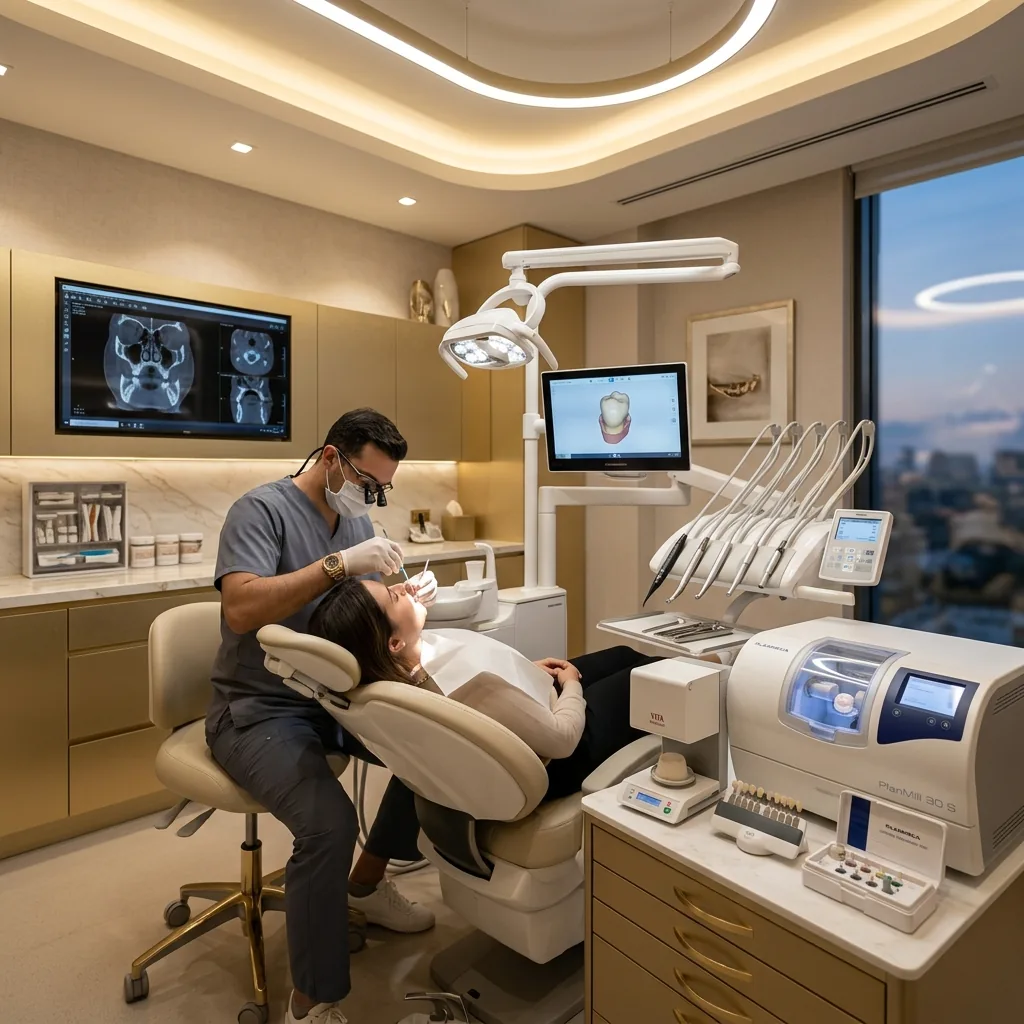
A coordinated reconstruction plan, designed around the bite and the face.
Records first
Photos, scans and bite analysis
Test-drive
Preview the plan before final treatment
Long-term
Maintenance built into the plan
A plan, not a single procedure
The short answer
Full mouth rehabilitation is a customised programme that restores most or all of the teeth and the way they meet. It can combine gum treatment, root canals, crowns, onlays, veneers, bridges and implants in a carefully sequenced plan. Suitability is confirmed only after an in-person examination, photographs, scans and, where indicated, radiographs or a CBCT scan at Smile Clinique in Malabar Hill, Mumbai.
Full mouth rehabilitation — sometimes called full mouth reconstruction — is an umbrella term for rebuilding the function, comfort and appearance of most or all of the teeth. It is not one treatment that can be bought off a menu. It is a sequence of decisions about disease control, bite stability, materials, tooth preparation and maintenance.
The clinical goal is a healthy foundation, a stable occlusion and restorations that can be cleaned. The aesthetic goal is a result that fits the face rather than a set of obviously artificial teeth. Those two goals are planned together, because a beautiful restoration that is difficult to maintain is not a successful restoration.
At Smile Clinique, the plan is built from records rather than guesswork: clinical photographs, intraoral scans, a careful assessment of how the teeth meet, and radiographs or a CBCT scan when the clinical examination indicates them. If a simpler treatment can solve the problem, a full reconstruction is not automatically recommended.
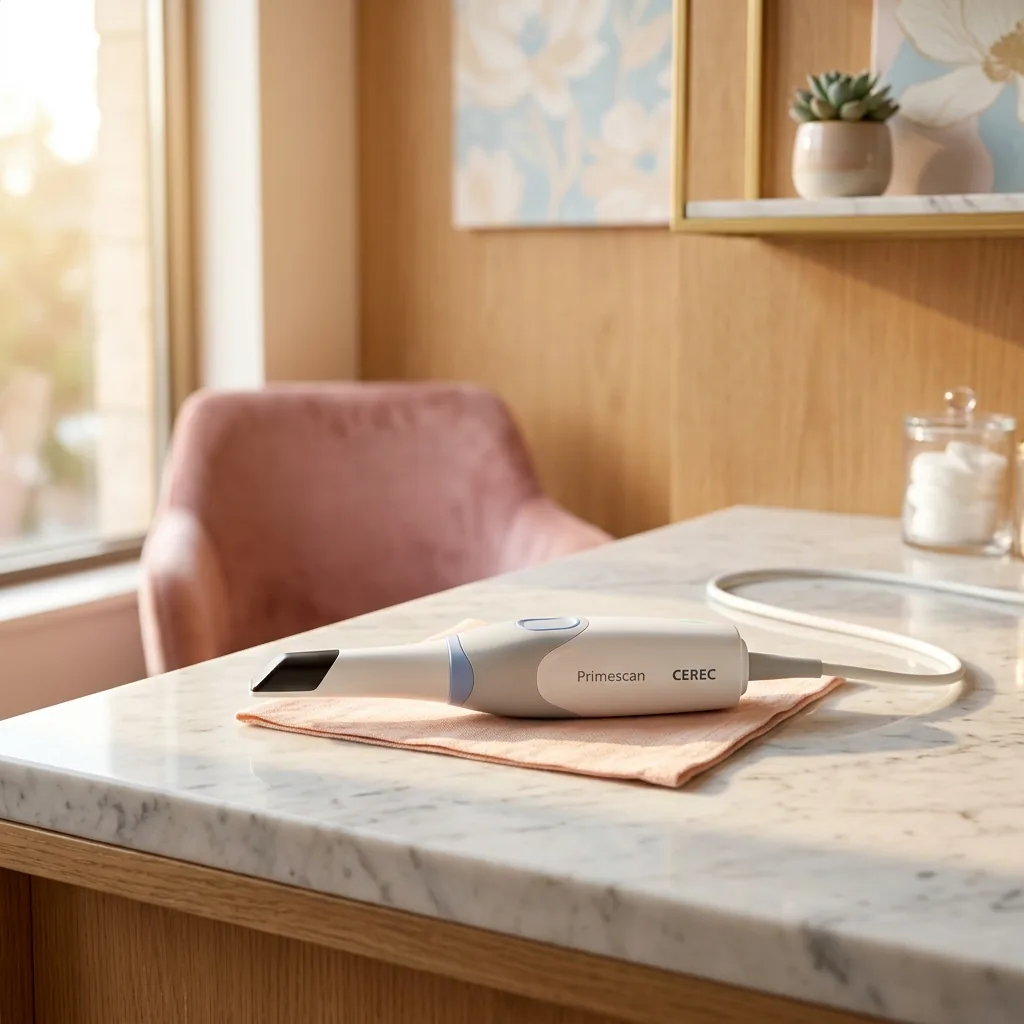
Records first: photographs, scans and bite analysis inform the plan.

Clinical guidance
Dr. Nidhi Mehta, BDS
Founder, Smile Clinique
When a full-mouth plan may be worth considering
Widespread wear or erosion
Teeth look short, flat or chipped; enamel has worn away; hot or cold sensitivity is increasing.
Multiple failing restorations
Old fillings, crowns, bridges or root canals are leaking, fracturing or being replaced repeatedly.
Missing teeth and bite collapse
Gaps have allowed neighbouring teeth to drift, the bite has changed, or chewing has become one-sided.
Jaw fatigue or an unstable bite
Clenching or grinding, jaw tiredness or a sense that the teeth no longer fit together comfortably.
A smile that has lost its frame
Dark spaces, uneven edges, exposed margins or a collapsed lower face affect confidence and function.
Complex needs in one plan
Gum health, bite, missing teeth and aesthetics need to be coordinated rather than treated as isolated problems.
A good fit if you are
- Adults with generalised wear, erosion or multiple failing teeth
- People missing several teeth who want a fixed, planned solution
- Patients whose bite has changed after years of grinding or tooth loss
- Anyone who has been told they need work across several teeth and wants a clear sequence
Not the right starting point if
- Someone looking for a single cosmetic fix with healthy, stable teeth
- Active gum disease or uncontrolled decay that has not yet been treated
- A patient who cannot commit to staged visits and long-term maintenance
This list is a guide, not a diagnosis. Suitability is confirmed only after an in-person examination.
The right reconstruction looks different for every mouth
Full mouth rehabilitation is a category, not a package. The options below describe common routes; the final mix is chosen after diagnosis.
Crown and bridge rehabilitation
Best for · Heavily restored teeth with enough healthy tooth structure
A planned rebuild of the bite using crowns and bridges on natural teeth, often after root canal treatment or gum care.
Minimally invasive onlays and veneers
Best for · Worn teeth where enamel can be preserved
Bonded ceramic or composite restorations that restore shape and bite with less removal of healthy tooth than full crowns.
Implant-assisted rehabilitation
Best for · Missing teeth or a lack of posterior support
Implants replace missing roots so bridges or crowns can be supported without cutting down healthy neighbouring teeth.
Full-arch implant rehabilitation
Best for · Most or all teeth missing, or teeth that cannot be saved
A fixed or removable prosthesis supported by four or more implants per arch, planned around bone volume and bite forces.
The Smile Clinique protocol
A full-mouth case is sequenced so that disease is controlled before aesthetics, and the bite is tested before it is made permanent.
Diagnosis and records
Consultation · 60–90 minutes
We examine the teeth, gums, bite and jaw. Photographs, intraoral scans and appropriate imaging are used to understand why the teeth have failed, not just which teeth need work.
Blueprint and test-drive
A digital plan and, where suitable, a provisional or trial restoration let you preview the proposed changes. Bite, speech and aesthetics are tested before irreversible treatment.
Disease control
Active decay, gum inflammation, infected teeth and hopeless teeth are addressed first. Bone grafting or extractions are planned early if implants will be needed.
Structural rebuild
Implants, root canals, crowns, onlays, veneers and bridges are completed in a planned order. Materials are selected for the load, the aesthetics and the maintenance needs of each tooth.
Review and maintenance
The final fit, bite, cleaning access and gum response are reviewed. A maintenance schedule and night guard, if indicated, help protect the investment.
What the literature actually says
Full mouth rehabilitation is a planning philosophy rather than a single procedure, so the evidence comes from the treatments used within it: ceramic restorations, implants, occlusal planning and minimally invasive materials. The consistent theme is that diagnosis, material choice and maintenance matter more than a brand name.
How to read this
Survival is not the same as success. A restoration or implant can remain in place while needing repair, hygiene treatment or replacement. The figures below are population averages, not personal guarantees.
95.5%
10-year survival of porcelain laminate veneers
A 2021 systematic review of 25 studies and about 6,500 veneers reported an estimated 10-year cumulative survival of 95.5% when fracture, debonding, caries and endodontic failure were counted as failures.
≈95%
10-year implant survival
A 2026 systematic review and meta-analysis of 34 studies, 7,522 patients and 20,445 implants reported survival of approximately 94.9%–95.2% at 10–25 years.
94.6%
Mean cumulative implant survival beyond 10 years
An earlier systematic review of 23 studies with a mean follow-up of 13.4 years reported a cumulative mean survival of 94.6% and mean marginal bone loss of 1.3 mm.
No single recipe
Occlusal philosophy must be individualised
A 2021 systematic review of full-mouth rehabilitation studies concluded that no occlusal philosophy is universally applicable; the plan should follow the diagnosis and the patient's needs.
Published survival figures are averages from selected study populations. They are not a promise for an individual mouth. Bone quality, gum health, smoking, diabetes, grinding, material choice, the operator's technique and long-term maintenance all change the real-world outcome.
Selected sources
Fan et al., Clinical Oral Investigations (2025)
Systematic review and meta-analysis of minimally invasive full-mouth rehabilitation for moderate to severe tooth wear.
Moraschini et al., Periodontology 2000 (2026)
Long-term dental implant survival, success and biological outcomes beyond 10 years.
Moraschini et al., International Journal of Oral and Maxillofacial Surgery (2014)
Systematic review of implant survival in studies with at least 10 years of follow-up.
Thimmappa et al., Journal of Indian Prosthodontic Society (2021)
Systematic review of philosophies used in full mouth rehabilitation.
The difference is in the planning
One coherent plan
Gum health, bite, missing teeth and aesthetics are sequenced together instead of being solved as disconnected problems.
A bite that feels predictable
The plan is tested with provisionals or a trial design before the final restorations are made, reducing surprises.
Materials matched to the mouth
Ceramic, zirconia, composite or implant-supported options are selected for load, appearance and cleanability — not one material for every tooth.
A maintainable result
Margins, contours and cleaning access are designed so that hygiene at home and professional reviews can protect the work.
Tools that support judgement
Intraoral scanning
A true-colour digital replica of the teeth replaces putty impressions for most restorative and aligner workflows.
CBCT when indicated
Three-dimensional imaging helps assess bone, roots and implant sites when the clinical examination calls for it.
Digital smile and bite design
Photographs and scans are used to plan proportions and occlusal relationships before treatment begins.
Provisional restorations
A trial phase lets you test speech, comfort and appearance while the laboratory prepares the final work.
From diagnostic records to final integration
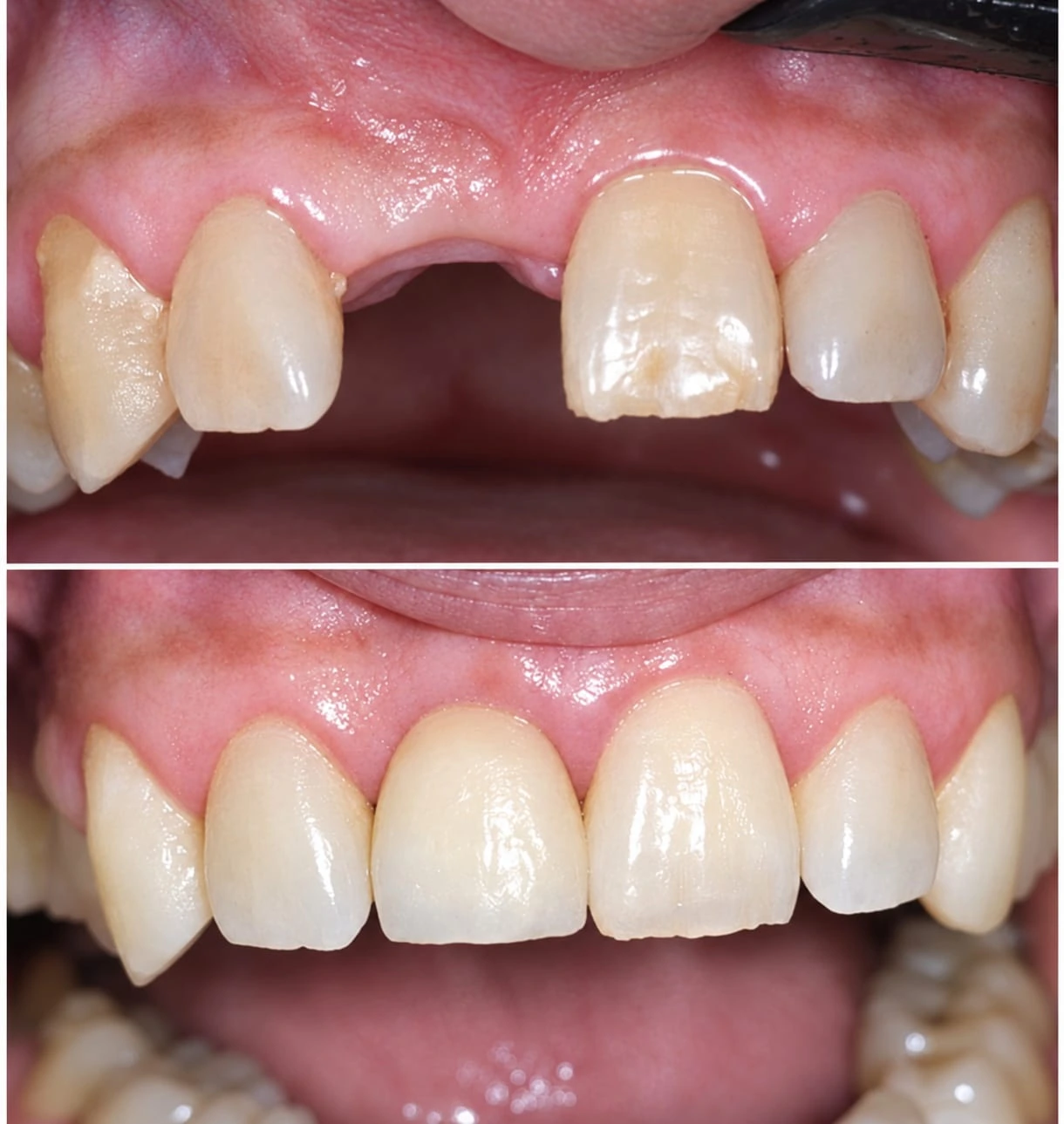
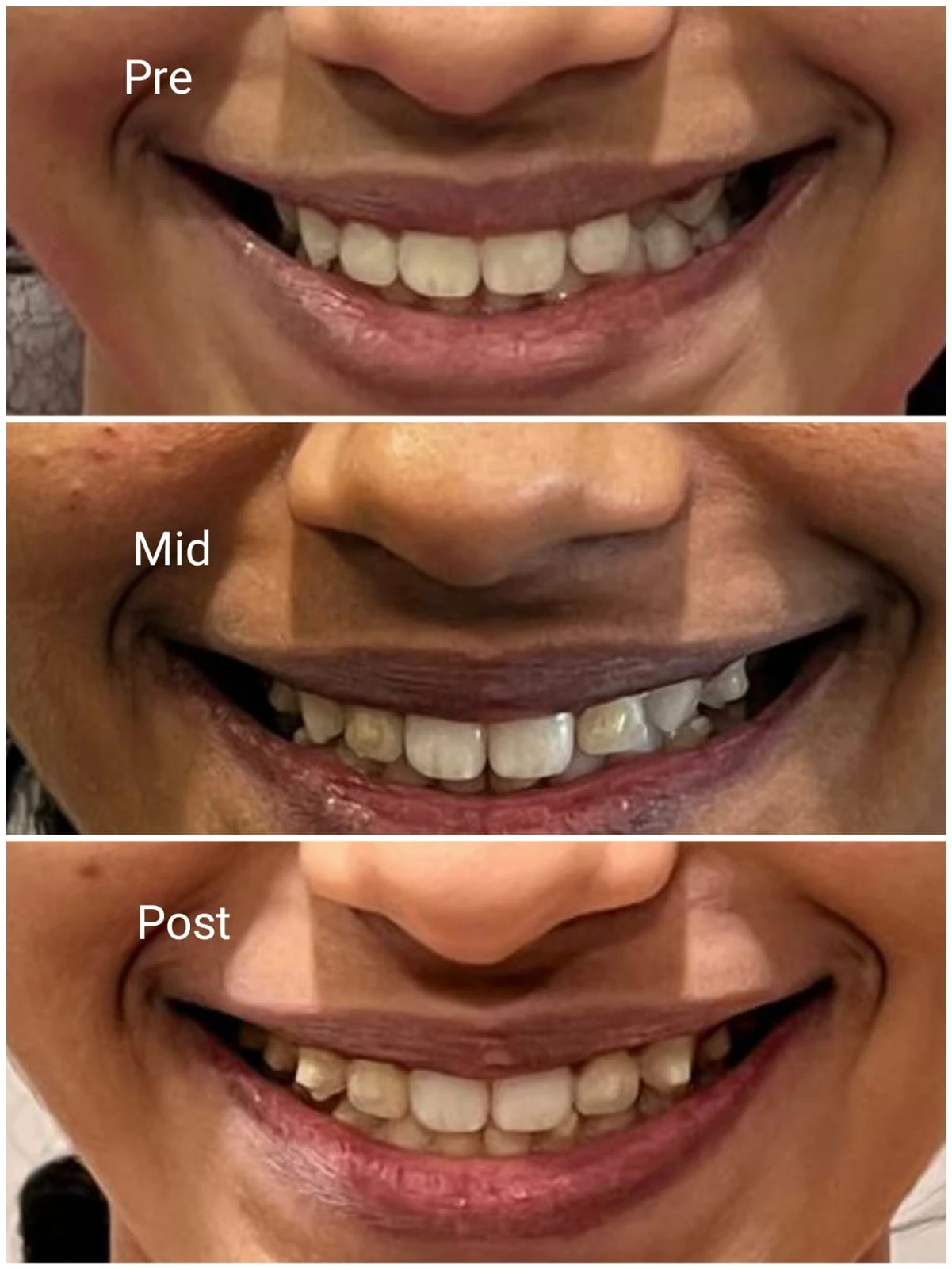
Representative clinical imagery from the planning and restorative workflow. Individual results vary.
Records first: photographs, scans and bite analysis inform the plan.
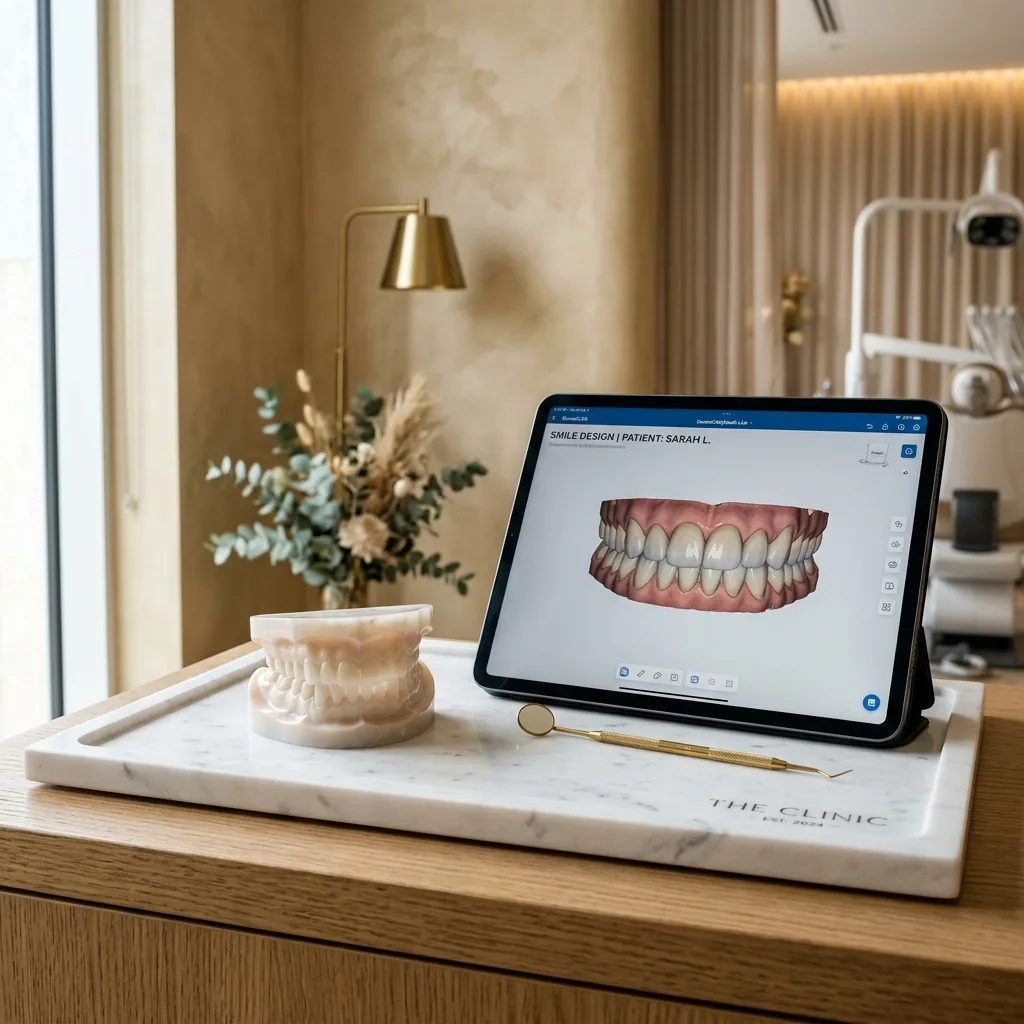
A visual plan lets patients preview direction before treatment starts.

The final fit is checked at the tooth, bite and tissue level.
Protect the result, not just the visit
The first two weeks
- Expect mild sensitivity or a feeling of fullness while the bite settles.
- Follow the written instructions for eating, cleaning and any provisional restorations.
- Report persistent high spots, pain or a loose temporary restoration promptly.
Daily home care
- Clean around every margin, bridge and implant with the recommended brushes and interdental aids.
- Use a soft brush and non-abrasive toothpaste; avoid biting nails, pens or ice.
- If you grind, wear the night guard exactly as instructed.
Professional reviews
- Keep scheduled hygiene visits so small problems are found before they become failures.
- Have the bite checked if a restoration feels high or if you notice new jaw fatigue.
- Tell your dentist about new medications, diabetes control changes or smoking.
Protecting the investment
- Do not use the teeth as tools.
- Limit frequent acidic drinks and sugar exposure.
- Seek help early for a chip, looseness or gum bleeding rather than waiting for pain.
Risks and honest limitations
- Sensitivity or temporary discomfort after preparation and placement.
- A temporary change in speech or bite while provisionals settle.
- Chip, fracture or debonding of ceramic or composite restorations.
- Implant failure, peri-implant inflammation or bone loss, particularly with smoking or poor hygiene.
- The need for further treatment if decay, gum disease or grinding continues.
- Time and cost can be greater than initially hoped if extractions, grafting or specialist care are needed.
Important
This page is educational and does not replace a clinical examination. Every treatment carries risks, and not every patient is a candidate. Ask questions, request a written plan, and seek a second opinion if you need one.
What changes the cost of full mouth rehabilitation in Mumbai
There is no honest single price for full mouth rehabilitation because the number of teeth, the materials, the foundation and the sequence vary enormously. A written plan after examination is the only reliable quote.
What a good quote should include
At Smile Clinique, you receive an itemised plan before treatment. Ask what is included, what is excluded, and what the maintenance costs are likely to be. A low headline price that excludes imaging, grafting, provisionals or the final prosthesis is not a useful comparison.
Request a written planWhat changes the price
How many teeth need restorations and how many are missing
Whether implants, bone grafting or sinus lifting are required
The material chosen: lithium disilicate, zirconia, composite or metal-ceramic
Gum treatment, root canal treatment and extractions
Laboratory work, provisional restorations and review visits
Case complexity and the number of treatment stages
Prices are not listed on this page because a responsible quote depends on your examination, imaging and the final plan. Ask for an itemised estimate in writing.
A Malabar Hill practice, close to home
Smile Clinique is a boutique dental practice at G 3, Akashdeep Building, Dongersi Road. Patients travel from Malabar Hill and across South Mumbai for treatment planning that takes the time to explain the why, not just the what.
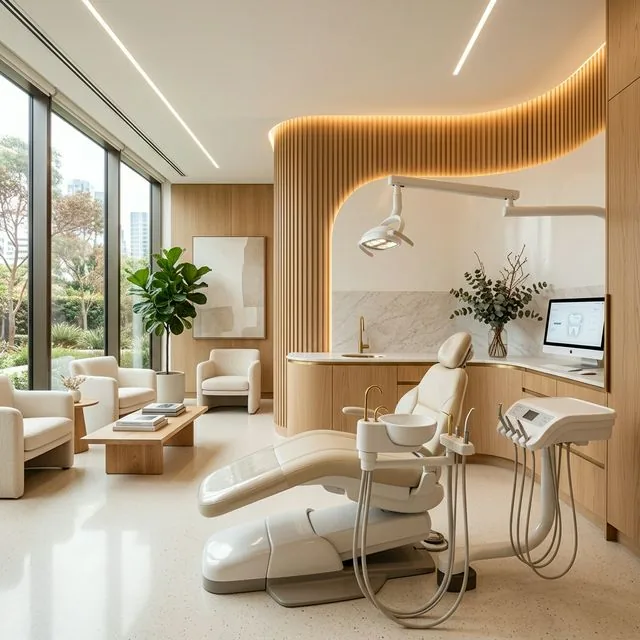
The sanctuary
G 3, Akashdeep Building, Dongersi Road, Malabar Hill, Mumbai - 400006
Mon–Sat · 9 AM–1 PM & 4 PM–7 PM
Clear answers before you commit
These are the questions patients ask most often. If yours is not here, call the clinic or ask at your consultation.
What is the difference between full mouth rehabilitation and full mouth reconstruction?
The terms are often used interchangeably. Both describe a coordinated plan to restore function, comfort and appearance across most or all of the teeth. Some clinicians use reconstruction for cases with more structural or implant work, but the important issue is the diagnosis and sequence, not the label.
Do I always need implants for full mouth rehabilitation?
No. If the natural teeth can be saved and the bite can be stabilised with crowns, onlays, veneers or bridges, implants may not be needed. Implants are considered when teeth are missing or cannot be restored predictably.
How long does full mouth rehabilitation take?
It depends on healing, gum condition, laboratory work and the number of stages. Some crown-based cases can be completed over several months; implant cases may need longer for healing and bone grafting. A realistic timeline is given after diagnosis, not as a sales promise.
Is full mouth rehabilitation painful?
Most treatment is carried out with local anaesthesia and comfort-focused techniques. Some visits are longer than a routine filling, and temporary sensitivity or soreness can occur. Anxiety is discussed openly so that the pace and sedation options can be planned.
Will my new teeth look natural?
That is the aim. Digital design, provisional restorations and careful shade and surface-characterisation work help avoid a monochrome, artificial result. The final appearance also depends on how much healthy tooth structure remains and how the gums heal.
Can I see the plan before treatment?
In many cases, yes. Photographs, scans and a digital or provisional trial can help you understand the proposed direction. A preview is a planning aid, not a guarantee of the final result.
How long will the restorations last?
There is no single lifespan. Published studies report high survival for ceramics and implants, but individual results depend on material, bite forces, hygiene, grinding and maintenance. The plan should include a realistic maintenance schedule.
Can I have full mouth rehabilitation if I have gum disease?
Active gum disease needs to be controlled first. Building restorations on inflamed or unstable foundations increases the risk of failure. Some patients need periodontal treatment and a review period before reconstruction begins.
Do you treat patients from outside Malabar Hill?
Yes. Smile Clinique is in Malabar Hill and serves patients from Walkeshwar, Cumballa Hill, Kemps Corner, Peddar Road, Breach Candy, Tardeo, Colaba, Worli and wider Mumbai. Call +91 98206 27550 to discuss the first appointment.
How do I start?
Book a consultation for a clinical examination and records. You will leave with a clearer diagnosis, a proposed sequence and an itemised plan — or with a recommendation for a simpler treatment if full reconstruction is not justified.
Related treatments

Your next step
Rebuild function. Restore confidence.
Start with a diagnosis, not a package. Book a full-mouth rehabilitation consultation at Smile Clinique in Malabar Hill, Mumbai.
G 3, Akashdeep Building, Dongersi Road, Malabar Hill, Mumbai - 400006
Mon–Sat · 9 AM–1 PM & 4 PM–7 PM
Educational content only. It is not a substitute for a clinical examination, diagnosis or personalised treatment plan. Treatment suitability and results vary between individuals.
All treatments