
Clear Aligners
& Orthodontics in Malabar Hill, Mumbai
Discreet alignment for crowding, spacing and bite problems — planned digitally, delivered at a pace that fits real life.
9 min readUpdated 28 October 2026Malabar Hill, Mumbai
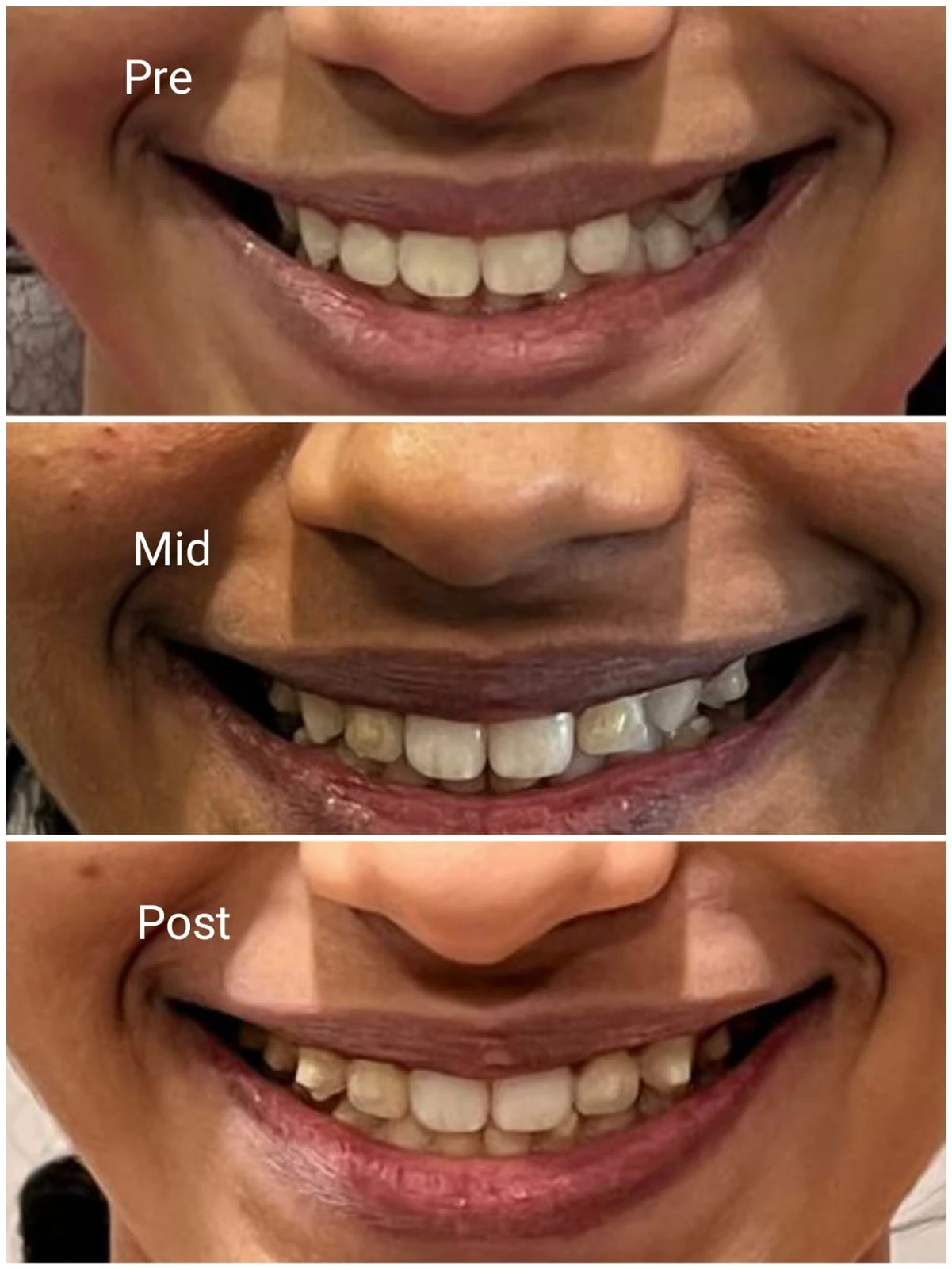
Frontal view: pre-treatment, mid-treatment and post-treatment. Clinical images shared with consent.
Mild–moderate
Aligners are strongest here
Severe cases
Braces may be more predictable
Retention
Protects the result long term
Alignment is a plan, not a tray
The short answer
Clear aligners are removable, transparent trays that gradually move teeth into a planned position. They work well for many mild to moderate cases of crowding, spacing and bite correction, and can be more comfortable and easier to clean than fixed braces. They are less predictable for severe or complex movements, and they depend on the patient wearing them for the prescribed hours each day. Fixed braces remain a strong option for many cases. An orthodontic assessment, scans and a digital plan are needed to decide.
Clear aligners are a sequence of custom-made trays that apply controlled force to move teeth. The trays are removable, which makes eating and cleaning easier, but it also means the result depends on cooperation: most aligner systems require around 20–22 hours of wear per day.
Not every malocclusion is an aligner case. Simple crowding, spacing and mild bite issues are often straightforward. Severe crowding, large overjets, significant skeletal discrepancies, impacted teeth and some extraction cases may be better treated with fixed braces or a combined orthodontic–surgical plan. The right answer depends on the diagnosis, not the marketing.
At Smile Clinique, orthodontic planning includes the bite, the gums, the jaw joints, the position of the roots and the long-term retention plan. Straight teeth that are not stable, or that sit on an unhealthy gum foundation, are not a successful outcome. Retention is discussed before treatment begins, not after the braces come off.
Frontal view: pre-treatment, mid-treatment and post-treatment aligner progress.
Clinical guidance
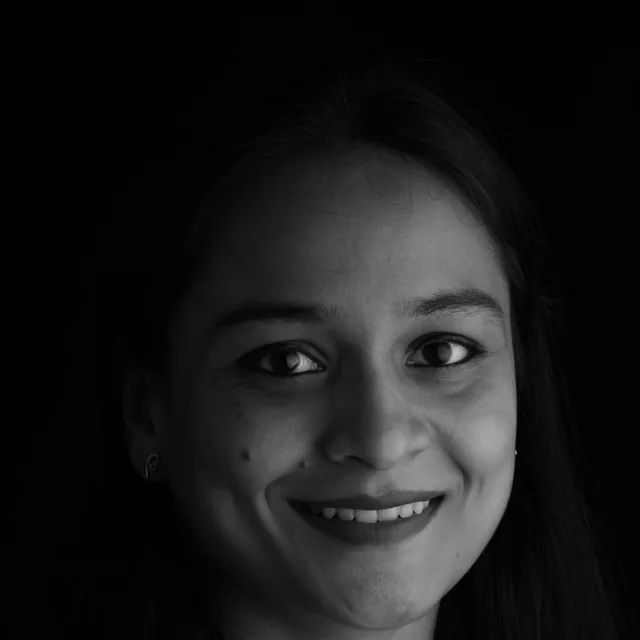
Dr. Nidhi Mehta, BDS
Founder, Smile Clinique
What orthodontic treatment can address
Crowding
Teeth overlap or rotate because there is not enough space in the arch.
Spacing and gaps
Generalised or localised spaces that affect the smile or the bite.
Relapse after previous braces
Teeth have drifted after orthodontic treatment, often because retention was incomplete.
Overjet or overbite
The front teeth protrude or overlap more than is comfortable or aesthetic.
Crossbite or narrow arches
The upper and lower teeth do not meet symmetrically; some cases need a broader assessment.
Hard-to-clean alignment
Overlapping teeth trap plaque and make hygiene difficult, increasing decay and gum risk.
A good fit if you are
- Adults and older teenagers with healthy teeth and gums
- Mild to moderate crowding, spacing or bite problems
- Patients willing to wear aligners for the prescribed hours
- People who want a discreet option for a social or professional reason
Not the right starting point if
- Severe skeletal discrepancies that need a combined surgical plan
- Untreated gum disease or active decay
- Patients who cannot commit to wear time and retention
This list is a guide, not a diagnosis. Suitability is confirmed only after an in-person examination.
Aligners, braces, or a combined plan
The appliance is a tool. The diagnosis and the finishing plan decide whether the result is stable and functional.
Clear aligners
Best for · Mild to moderate crowding, spacing and selected bite corrections
Removable transparent trays. Discreet and easier to clean, but dependent on daily wear time and suitable case selection.
Ceramic braces
Best for · Patients who want fixed treatment with less visible hardware
Tooth-coloured brackets and wires. More visible than aligners but can handle a wider range of movements.
Lingual braces
Best for · Selected cases where appearance is a priority
Brackets placed on the tongue side of the teeth. Very discreet, but technically demanding and not suitable for every bite.
Fixed metal braces
Best for · Complex movements and cases needing maximum control
The most established orthodontic appliance. Durable and predictable for many complex cases, with a visible appearance.
The orthodontic pathway
Orthodontics is a series of small, controlled movements. The plan and the retention phase are as important as the active treatment.
Assessment and records
We examine the bite, gums, jaw joints and tooth positions. Photographs, radiographs and intraoral scans are used to plan and monitor treatment.
Digital treatment plan
The projected tooth movement is reviewed with you. The plan is a guide, not a guarantee; refinements may be needed.
Active treatment
Aligners are changed on schedule, or braces are adjusted at intervals. Wear time, cleaning and comfort are reviewed at each visit.
Refinement
Near the end, small corrections may be needed. This is normal and is planned rather than treated as a failure.
Retention
Retainers are fitted to protect the result. Teeth can move throughout life, so long-term retention is part of the treatment, not an optional extra.
What the literature actually says
Clear aligner research has matured, but the evidence is nuanced. Aligners are well supported for mild to moderate malocclusion; they are not automatically equivalent to fixed braces for every movement. The strongest message is that case selection and retention matter.
How to read this
Survival is not the same as success. A restoration or implant can remain in place while needing repair, hygiene treatment or replacement. The figures below are population averages, not personal guarantees.
Mild–moderate
Where aligners perform best
An overview of 18 systematic reviews found clear aligner treatment effective for mild to moderate malocclusion, with inferior outcomes for severe cases or specific tooth movements.
No significant difference
Simple nonextraction cases in a 21-RCT meta-analysis
A 2025 systematic review and meta-analysis of 21 randomised trials found no significant difference in ABO objective grading, Little Irregularity Index or PAR scores between aligners and fixed appliances for simple nonextraction cases.
Better hygiene indices
Plaque, gingival and bleeding scores
The same meta-analysis reported significantly lower plaque, gingival and bleeding indices with clear aligners, alongside better quality-of-life scores at six months.
Relapse risk
Retention is not optional
The overview of systematic reviews noted greater relapse with clear aligner treatment. Long-term retainer wear and review are essential regardless of which appliance is used.
The overall quality of evidence in orthodontic comparisons is often low to moderate, and many studies involve selected cases. A digital simulation shows a planned movement, not a guaranteed biological response. Root resorption, gum response, compliance and growth can all change the outcome.
Selected sources
Papageorgiou et al., Clinical Oral Investigations (2021)
Overview of systematic reviews on clear aligner effectiveness compared with fixed appliances.
Baneshi et al., Journal of Evidence-Based Dental Practice (2024)
Systematic review and meta-analysis of clear aligners versus fixed appliances.
Thai et al., American Journal of Orthodontics and Dentofacial Orthopedics (2025)
Systematic review and meta-analysis of 21 RCTs comparing clear aligners and fixed appliances.
Alwafi et al., Dentistry Review (2023)
Overview of systematic reviews and RCTs on predictability and clinical effectiveness of clear aligner therapy.
The difference is in the planning
Discreet treatment
Clear aligners are much less visible than metal braces, which can matter in professional and social settings.
Removable and cleanable
You can remove the trays to eat and brush, which can make hygiene easier than with fixed appliances.
Digital planning
Scans and software help visualise the proposed movement and plan attachments and refinements.
Fixed-brace backup
When aligners are not the most predictable option, fixed braces remain available rather than forcing one system.
Tools that support judgement
Intraoral scanning
Digital models replace putty impressions and allow accurate aligner fabrication and progress review.
Digital treatment simulation
Software predicts tooth movement and helps discuss the plan, limitations and likely refinements.
Attachments and interproximal reduction
Small tooth-coloured attachments or controlled enamel reduction may be used to support specific movements.
Retainer planning
Fixed and removable retainers are planned before treatment ends so the result has the best chance of lasting.
A real clear-aligner case, in two views
Frontal and profile Pre / Mid / Post photographs from a patient treated at Smile Clinique in Malabar Hill, Mumbai, shared with consent. Individual results vary.
Frontal · Pre / Mid / Post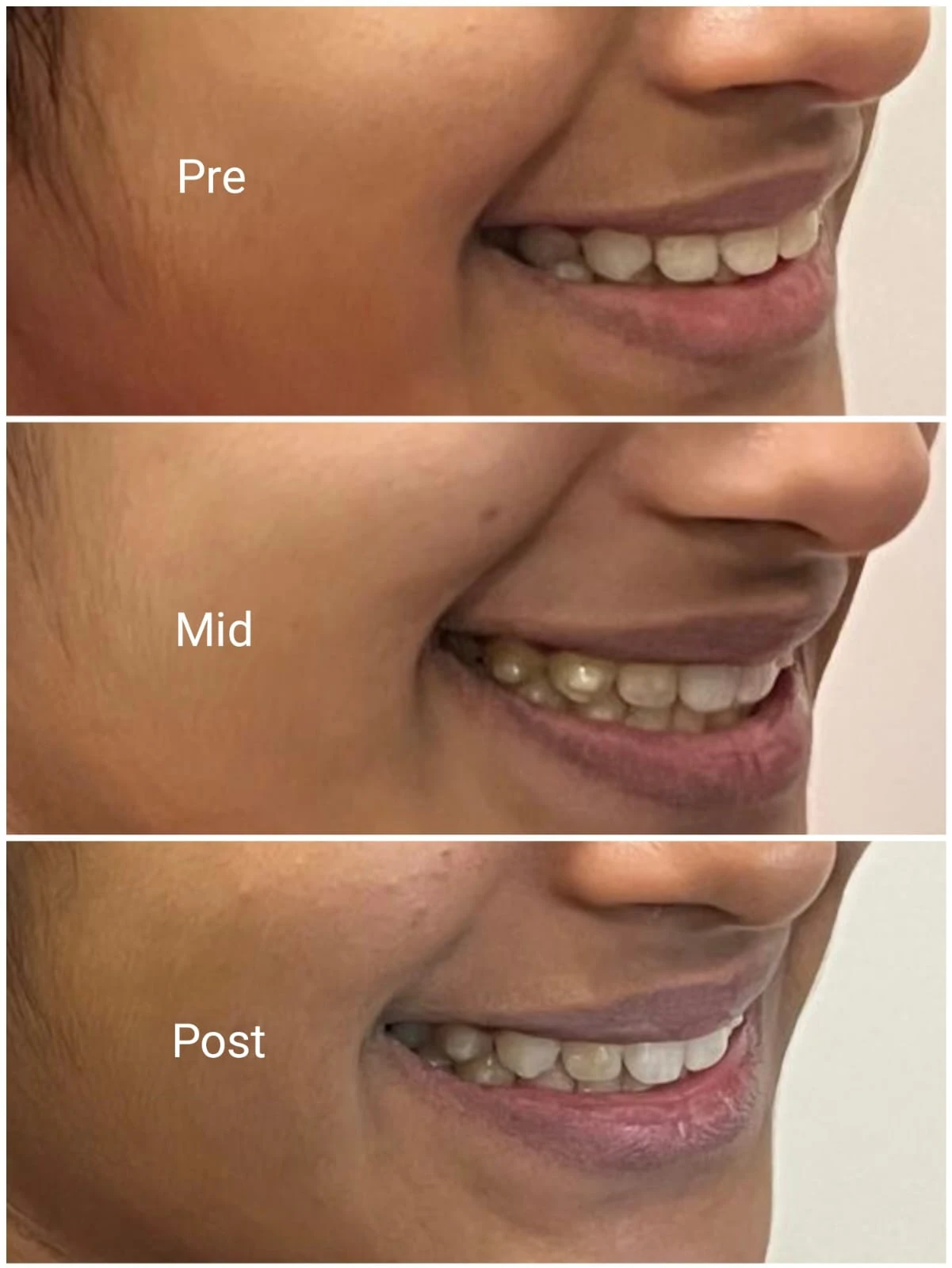 Profile · Pre / Mid / Post
Real clear-aligner case · Malabar Hill, Mumbai
Clear aligner treatment: frontal and profile progress
This patient's aligner journey is documented in two views at three stages: pre-treatment, mid-treatment and post-treatment. The mid-treatment photographs show the tooth-coloured attachments used to guide aligner movement; the post-treatment views show the finished alignment and smile balance.
Patient images shared with consent. No identifying details shown. Individual results vary.
Discuss clear alignersProtect the result, not just the visit
During aligner treatment
- Wear the trays for the prescribed hours, usually around 20–22 hours per day.
- Remove them for eating, drinking anything other than water, and brushing.
- Clean the trays and your teeth before reinserting them.
During fixed braces
- Avoid hard, sticky foods that can break brackets or wires.
- Use the recommended interdental brushes and fluoride products.
- Attend adjustment visits and report loose brackets or wires.
Discomfort
- Mild soreness for a few days after a new tray or adjustment is normal.
- Use the recommended pain relief if needed and eat softer foods temporarily.
- Report severe pain, a loose appliance or a tray that does not fit.
Retention
- Wear retainers exactly as instructed; teeth can move throughout life.
- Bring retainers to review appointments so they can be checked.
- Replace a lost or damaged retainer promptly.
Risks and honest limitations
- Relapse after treatment, especially without consistent retainer wear.
- Root resorption or gum recession in susceptible patients.
- Caries and gum inflammation if hygiene is poor, particularly with fixed braces.
- Aligners not fitting or not tracking as planned, requiring refinements.
- Treatment time longer than predicted, especially with poor wear time.
- Not suitable for severe skeletal problems without a combined plan.
Important
This page is educational and does not replace a clinical examination. Every treatment carries risks, and not every patient is a candidate. Ask questions, request a written plan, and seek a second opinion if you need one.
What changes the cost of orthodontics in Mumbai
Orthodontic fees reflect the complexity of the case, the appliance, the number of reviews and the retention plan. A quote should include the full active phase and the retainers.
What a good quote should include
Ask whether the quote includes refinements, retainers and post-treatment reviews. Orthodontic treatment is a process, not a single purchase, and the retention phase is part of the result.
Request a written planWhat changes the price
Complexity of the crowding, spacing or bite problem
Aligner system versus ceramic, lingual or metal braces
Number of aligner stages and expected refinements
Extractions, attachments or auxiliary appliances
Retainers and follow-up reviews
Laboratory and digital planning costs
Prices are not listed on this page because a responsible quote depends on your examination, imaging and the final plan. Ask for an itemised estimate in writing.
A Malabar Hill practice, close to home
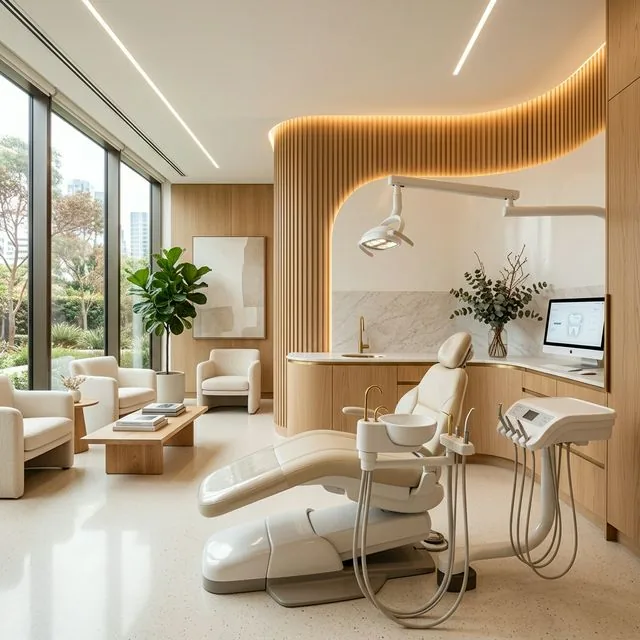
Smile Clinique is a boutique dental practice at G 3, Akashdeep Building, Dongersi Road. Patients travel from Malabar Hill and across South Mumbai for treatment planning that takes the time to explain the why, not just the what.
The sanctuary
G 3, Akashdeep Building, Dongersi Road, Malabar Hill, Mumbai - 400006
Mon–Sat · 9 AM–1 PM & 4 PM–7 PM
Clear answers before you commit
These are the questions patients ask most often. If yours is not here, call the clinic or ask at your consultation.
Are clear aligners as effective as braces?
For mild to moderate cases, evidence supports aligners as an effective alternative. For severe or complex movements, fixed braces may be more predictable. The right choice depends on the diagnosis, not a general claim.
How many hours a day do I need to wear aligners?
Most systems recommend around 20–22 hours per day. The trays are removed for eating, drinking anything other than water, and brushing. Poor wear time is one of the most common reasons treatment takes longer.
How long does orthodontic treatment take?
It varies with the complexity of the case and the patient's response. Simple alignment may take months; complex bite correction can take longer. A realistic estimate is given after records and planning, with the understanding that refinements may be needed.
Is orthodontic treatment painful?
Mild soreness for a few days after a new tray or adjustment is common. It usually settles. Severe pain, a loose appliance or a tray that does not fit should be reported.
Can adults have braces or aligners?
Yes. Healthy teeth and gums can be moved at any age. Adults may have more complex needs such as crowns, implants, gum recession or previous orthodontic relapse, so a combined plan is often useful.
Will I need a retainer forever?
Long-term retention is often recommended because teeth can move throughout life. Some patients use a fixed retainer and a removable night retainer. The exact plan depends on the case.
Can aligners fix an overbite?
Some overbites can be improved with aligners, but not all. The cause matters: dental overbite, skeletal pattern, jaw relationship and habits can all contribute. A clinical assessment is needed.
Do I need teeth removed?
Not always. Extractions are considered when there is significant crowding or a bite problem that cannot be resolved with space creation alone. The decision is made from records, not a routine rule.
Can I whiten during orthodontic treatment?
It is usually better to wait until active treatment is complete, especially with fixed braces, so the shade is even. Whitening can be planned after the appliances are removed.
Where can I get an orthodontic consultation in Mumbai?
Smile Clinique is at G 3, Akashdeep Building, Dongersi Road, Malabar Hill, Mumbai - 400006. Call +91 98206 27550 to arrange an orthodontic assessment in Malabar Hill.
Related treatments

Your next step
Straighten with a plan. Retain with discipline.
Book an orthodontic assessment at Smile Clinique in Malabar Hill, Mumbai. We will discuss aligners, braces and the retention plan honestly.
G 3, Akashdeep Building, Dongersi Road, Malabar Hill, Mumbai - 400006
Mon–Sat · 9 AM–1 PM & 4 PM–7 PM
Educational content only. It is not a substitute for a clinical examination, diagnosis or personalised treatment plan. Treatment suitability and results vary between individuals.
All treatments